
What Is ADHD?
Clinically, Attention-Deficit/Hyperactivity Disorder (ADHD) is a neurodevelopmental condition involving persistent patterns of inattention and/or hyperactivity and impulsivity that can interfere with functioning. Symptoms may affect areas such as school, work, relationships, organization, time management, and daily responsibilities.
In everyday terms, someone with ADHD may know exactly what needs to be done but still have difficulty getting started, staying focused, keeping track of time, organizing tasks, or stopping an impulse before acting on it. These difficulties are not necessarily a matter of motivation or effort. ADHD can make otherwise ordinary responsibilities require significantly more planning and mental energy.
ADHD does not look exactly the same in every person. Some people primarily struggle with attention and organization, while others experience more noticeable impulsivity, restlessness, emotional regulation difficulties, or a combination of concerns.
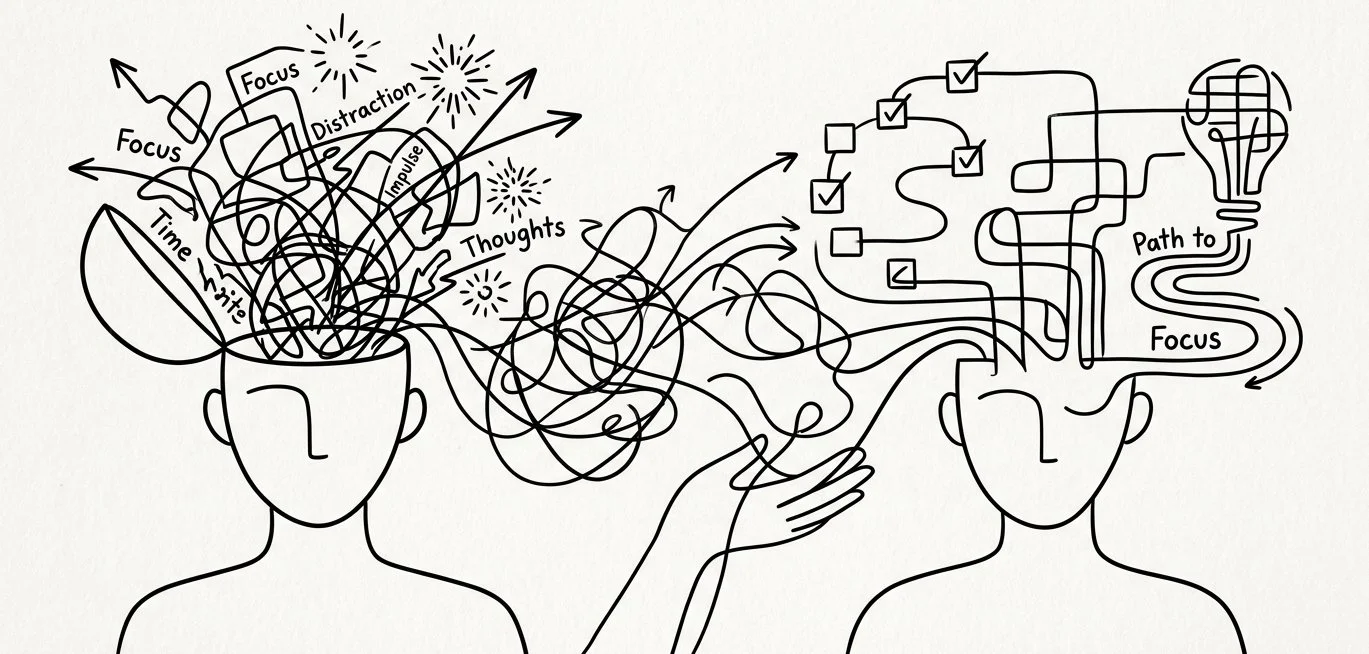
Executive functioning – difficulty organizing, planning, prioritizing, initiating, or completing tasks.
Attention and focus – difficulty sustaining attention, shifting attention, or managing distractions.
Time management – frequently losing track of time, underestimating how long tasks will take, or struggling with deadlines.
Emotional regulation – experiencing emotions intensely or having difficulty returning to a manageable emotional state.
Impulsivity and frustration – acting quickly, becoming easily frustrated, or having difficulty pausing before responding.
Work and school functioning – difficulty keeping up with responsibilities, deadlines, studying, meetings, or workplace expectations.
Relationships and communication – forgetting commitments, interrupting, becoming distracted during conversations, or struggling with conflict.
ADHD is not simply a problem with motivation or discipline. Counseling can focus on understanding individual patterns, building useful skills, reducing unnecessary frustration, improving quality of life, and finding strategies that work with the person's strengths.
Common ADHD Concerns
What Can ADHD Feel Like?
People seeking ADHD counseling may describe experiences such as:
Frequently forgetting tasks, appointments, or responsibilities
Difficulty starting or finishing tasks
Procrastination despite wanting to get things done
Feeling overwhelmed by organization or daily responsibilities
Losing focus during conversations or activities
Difficulty managing strong emotions or frustration
Frequently losing or misplacing things
Difficulty estimating how long tasks will take
Missing deadlines despite intending to meet them
Restlessness or difficulty sitting still
Interrupting or responding before someone has finished speaking
Becoming easily distracted by surroundings or thoughts
Difficulty balancing responsibilities at work, school, home, or in relationships
You don't necessarily need a formal ADHD diagnosis to benefit from counseling. Therapy can also be useful when you are exploring whether ADHD may help explain your experiences, adjusting to a recent diagnosis, or looking for strategies to manage challenges associated with attention, organization, emotional regulation, and executive functioning.
ADHD Counseling in Maryland
Dagenhart Health and Wellness provides counseling and medication management for ADHD and related mental health concerns. Treatment can focus on executive functioning, attention, organization, time management, emotional regulation, relationships, coping strategies, and practical ways to make daily life more manageable.
If ADHD-related challenges are affecting you or your child’s relationships, work, school, routines, emotional well-being, or ability to manage everyday responsibilities, ADHD counseling may be able to help.